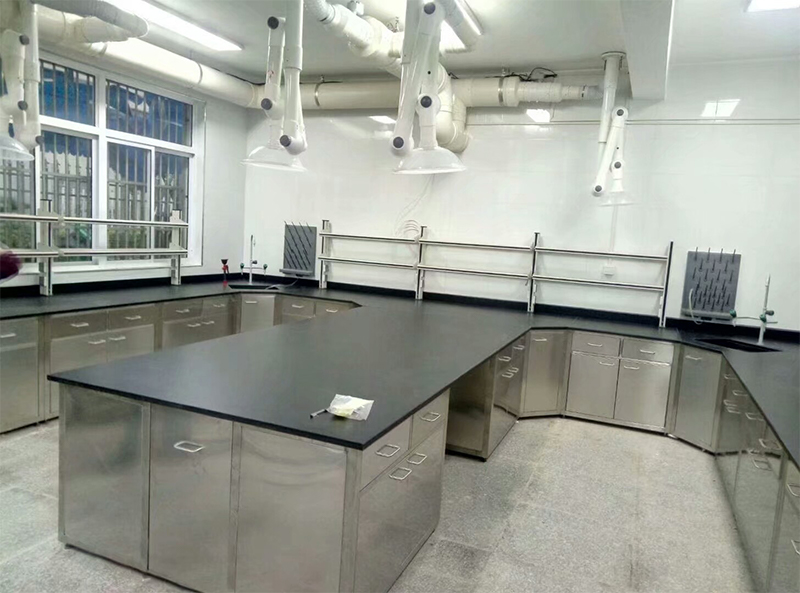




Russian geological and mining laboratories handle some of the heaviest equipment in the industry. ICP-OES spectrometers, X-ray fluorescence analyzers, rock sample preparation equipment — a single instrument can weigh over 100kg. Stack a few of these on one bench, and you need something that won't flex, warp, or collapse. That's where load capacity testing separates serious lab furniture from decorative steel boxes.
What HJSLab's 500kg Rating Actually Means
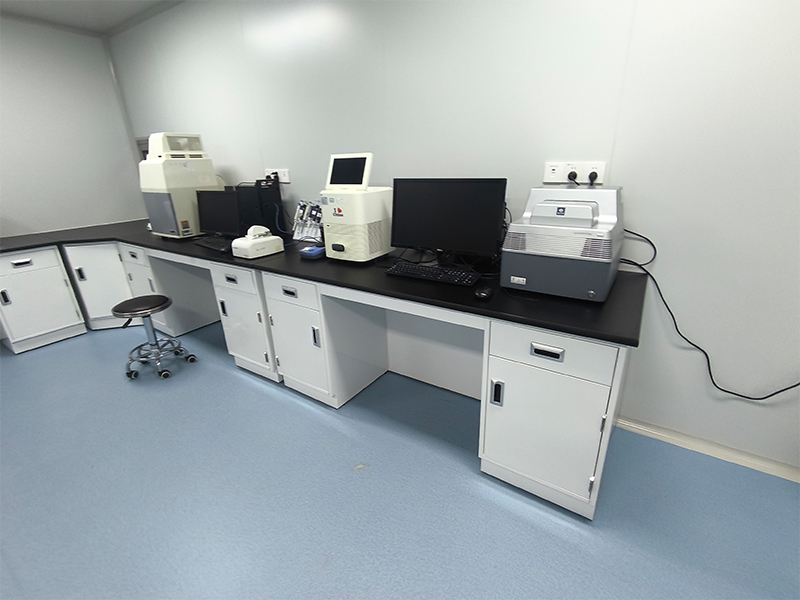
Our testing follows JB/T 7876 protocol. We place calibrated weights at the bench center, hold for 24 hours, then measure deflection and residual deformation after unloading. For our 500kg-rated full steel lab bench, maximum deflection under load is 2mm. Residual deformation after unloading must be below 0.5mm — meaning the bench springs back to essentially flat.
The structural difference between our 300kg and 500kg benches isn't just thicker steel. The 500kg version uses 50×75mm box-section steel tubing at 1.5mm wall thickness, versus 40×60mm at 1.2mm for the 300kg model. Cross-beam spacing drops from 600mm to 400mm — that extra beam per meter makes a measurable difference in rigidity.
Built for Russian Industrial Labs
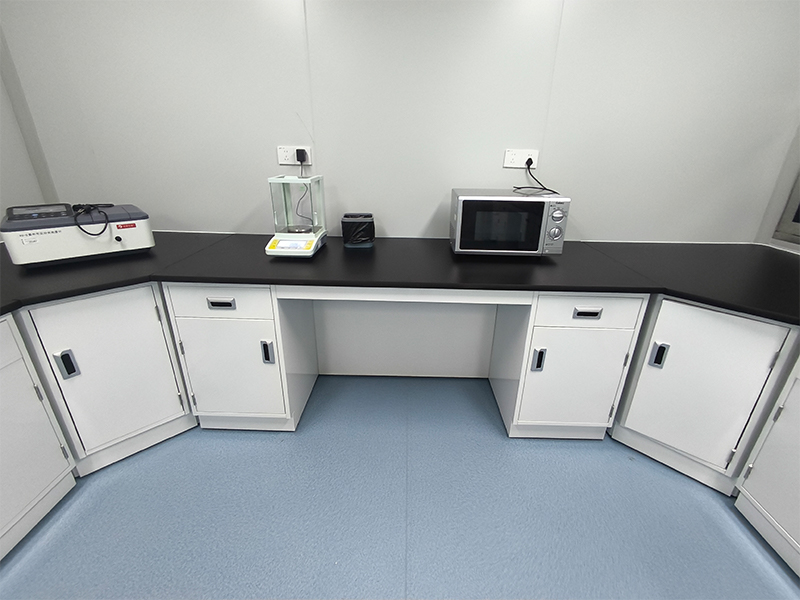
HJSLab has supplied heavy-duty full steel lab benches to geological survey institutes and metallurgical testing centers across Russia. Our factory in Suzhou runs production lines certified to ISO 9001 — every batch includes load test certificates with deflection measurements accurate to 0.1mm.
China-Russia rail freight takes 14-18 days from Suzhou to Moscow, with options for delivery to regional cities including Yekaterinburg, Novosibirsk, and Vladivostok. HJSLab handles export packaging rated for rail transport, with steel edge protectors and moisture barrier wrapping.
For labs that need benches rated beyond 500kg — we do custom structural engineering. Our team calculates beam specifications for your specific instrument layout. Reach out for load capacity certification documents and a project quote.