




Russia sits on some of the most seismically active ground in Asia. Kamchatka, Sakhalin, the Baikal rift zone, the Caucasus — these aren't abstract geological features. They're places where labs operate daily, and where an earthquake can turn unsecured furniture into projectiles. A 200kg lab bench sliding across the room during a tremor doesn't just damage equipment. It kills people.
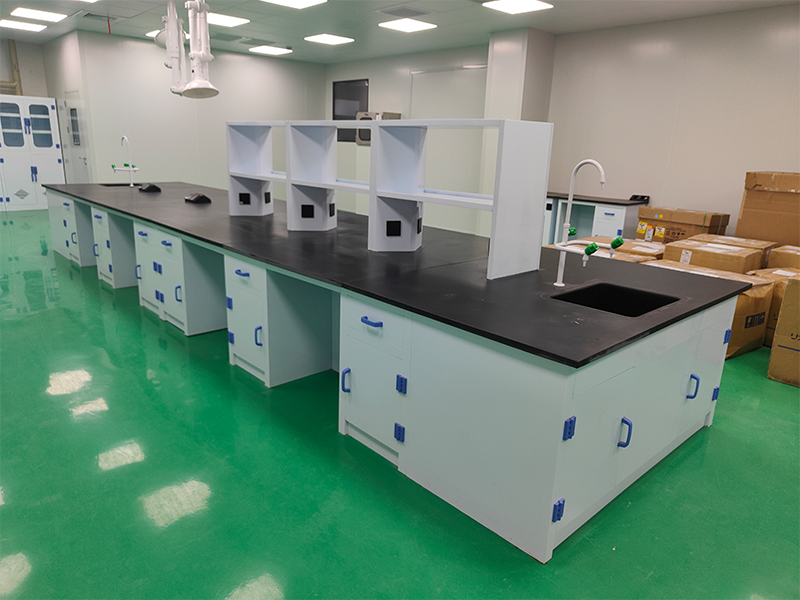
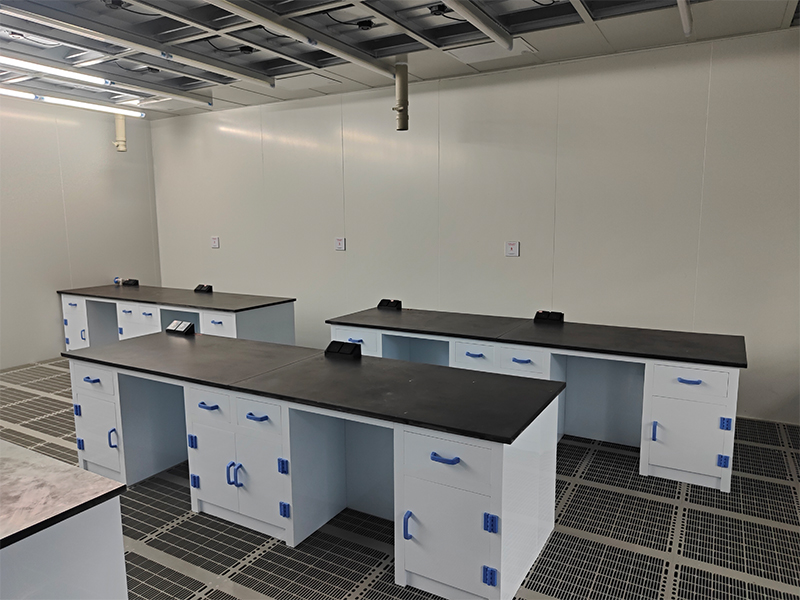
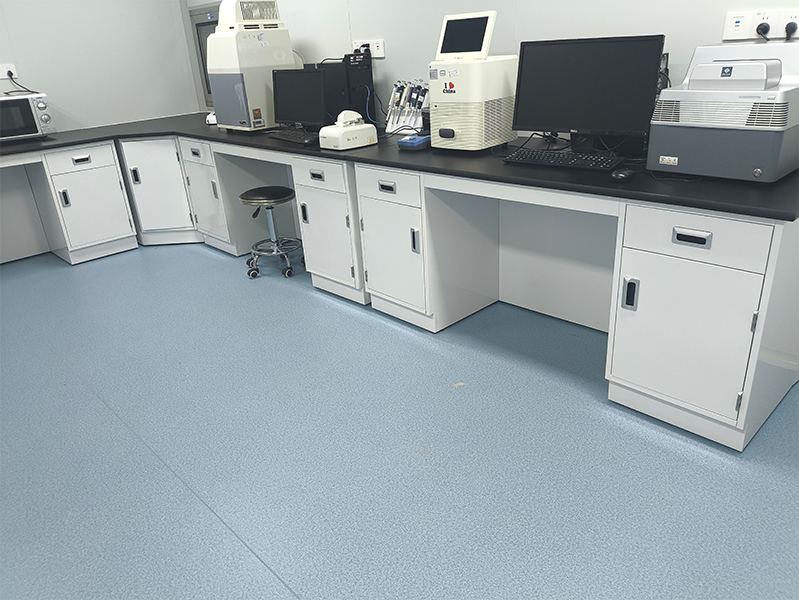
HJSLab, a laboratory equipment manufacturer based in Suzhou, China, builds full steel lab benches with seismic resistance engineered into every joint and connection point. These aren't standard benches with anchors bolted on as an afterthought — the seismic design starts at the frame level.
The Reinforced Full Steel Frame
HJSLab's seismic benches use 1.2mm cold-rolled steel for the entire frame structure — legs, cross members, cabinet shells, everything. But thickness alone doesn't make something earthquake-proof. The key is cross-bracing. Diagonal steel braces connect each leg to the frame at 45-degree angles, converting lateral seismic force into tension and compression along the brace rather than letting the frame rack and collapse.
The welds matter too. HJSLab uses continuous MIG welds at all structural joints — not spot welds. Spot welds fail under cyclic loading, which is exactly what an earthquake delivers. Continuous welds distribute stress evenly and don't create concentration points where cracks can start.
Three-Layer Anchoring System
Layer one: floor anchors. Each bench leg has a base plate with four M10 anchor bolt holes. When bolted into a concrete floor, each anchor point holds 5kN of lateral force. For a standard 1500mm bench, that's 20kN total lateral resistance — far more than needed for most seismic zones in Russia.
Layer two: wall brackets. For benches positioned against walls, HJSLab provides L-shaped steel brackets that bolt the bench frame directly to the wall structure. This prevents the bench from tipping backward during vertical seismic acceleration.
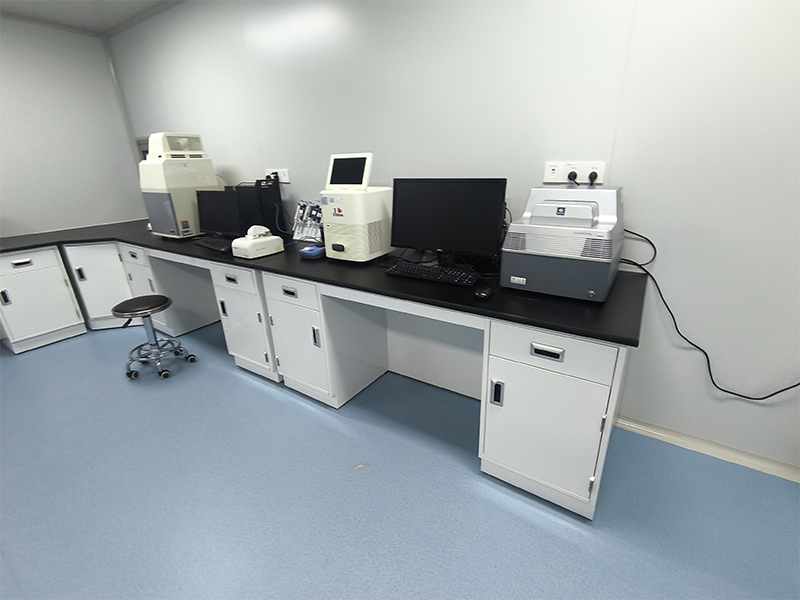
Layer three: bench interconnection. When multiple benches form a row, HJSLab's interconnection kits bolt adjacent frames together so they behave as one rigid unit. A row of five connected benches has far more seismic stability than five individual benches standing alone.
GOST Compliance for Russian Laboratories
Russian lab furniture must comply with GOST R 12.2.032-78 for workplace safety. HJSLab provides full documentation packages including structural calculations, material certificates, and seismic test data formatted for GOST submission. The company's ISO 9001-certified Suzhou factory maintains traceability from raw steel coil to finished bench, which Russian regulators require.
Logistics and Cost Advantage
Getting lab furniture from China to Russia is straightforward. Trans-Siberian rail freight from Suzhou to Moscow takes 15 to 20 days — faster than sea and cheaper than air. HJSLab ships benches in flat-pack form with all anchoring hardware included. Assembly instructions come in Russian and English.
Pricing is 30 to 40 percent below European equivalents. HJSLab's manufacturing scale in Suzhou keeps costs down without cutting structural corners. Every seismic bench ships with a test certificate showing it's been loaded to specification before leaving the factory.
If your lab is in a seismic zone anywhere in Russia, don't wait for the next earthquake to find out your furniture isn't secured. Contact HJSLab for seismic-rated full steel benches designed to keep your people and equipment safe.