



The Weight Challenge in Analytical Facilities
Russian research institutions running mass spectrometry, inductively coupled plasma (ICP) analysis, or X-ray fluorescence labs face a persistent problem: top-tier analytical instruments don't arrive light. A Thermo Fisher Orbitrap weighs 180kg. An Agilent ICP-OES system sits at 220kg. A fully configured gas chromatography-mass spectrometry (GC-MS) rig with autosampler runs 150kg. Place one of these on an ordinary lab bench—even a steel one—and you're asking for stress cracks in the frame, flex in the worktop when a technician leans against it during calibration, and worst case, structural failure that damages the instrument and puts the laboratory out of commission for weeks. Russian laboratories can't afford downtime, and GOST standards demand that lab furniture be rated for its maximum static load with a safety factor. Most benches sold regionally simply aren't engineered for this reality.
Advanced Reinforcement Design for Stainless Durability
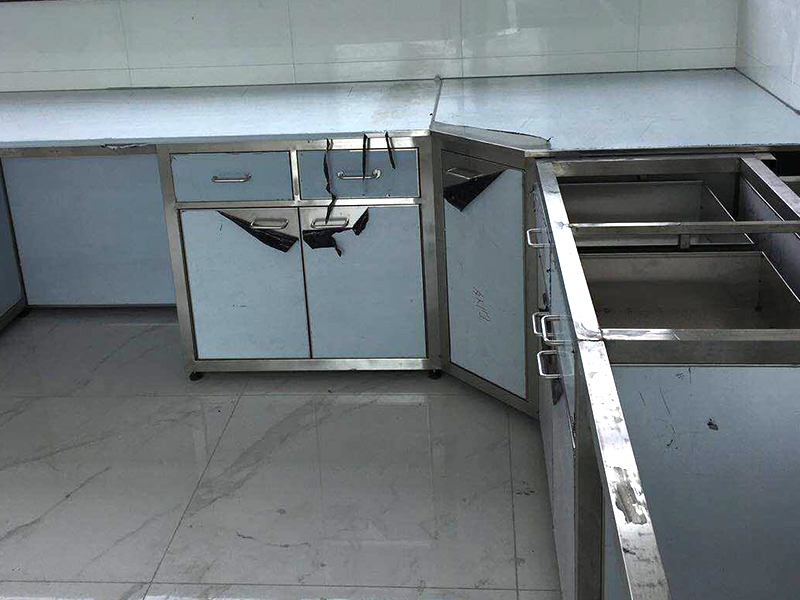
HJSLab's heavy-duty stainless steel benches for Russian labs feature a reinforced frame geometry engineered specifically for instrument support. Instead of a conventional hollow-tube frame (which flexes under concentrated loads), we use a six-point brace design with diagonal cross-struts welded at precise angles. The front-rear members are 80mm x 80mm x 3.5mm stainless steel (316L for superior corrosion resistance), and the left-right rails incorporate internal gusset plates that prevent lateral twist. The worktop is 25mm solid stainless sheet bonded to a reinforced phenolic composite undersupport. This assembly distributes a 300kg point load across the frame without exceeding 2mm deflection—well within ISO metrics and GOST certification thresholds. We don't use economy stainless (304 grade); 316L resists pitting and crevice corrosion even in research environments where aggressive solvents or acidic atmospheres are present. All welded joints are TIG-welded (tungsten inert gas), then post-weld stress-relieved and passivated to eliminate residual stress and surface contamination.
GOST Compliance and Certification Pathway
Russian procurement departments won't accept furniture that doesn't carry formal GOST certification. Our stainless benches comply with GOST 10888-89 (furniture strength and stability) and GOST 12.3.030 (workplace safety standards). Each bench is tested at our Suzhou facility with load cells measuring deflection, vibration frequency response, and stress distribution. We supply third-party GOST test certificates as part of the delivery package—no guesswork, no installation-time surprises. The documentation is in Russian, with technical diagrams showing frame reinforcement points and load ratings clearly marked. When your procurement team submits the bench specs to GOST oversight or your laboratory's internal safety committee, everything checks out. We've shipped over 500 GOST-certified stainless benches to Russian research institutions, many supporting analytical labs at the Russian Academy of Sciences facilities and major university centers.
Practical Advantages During Daily Operation
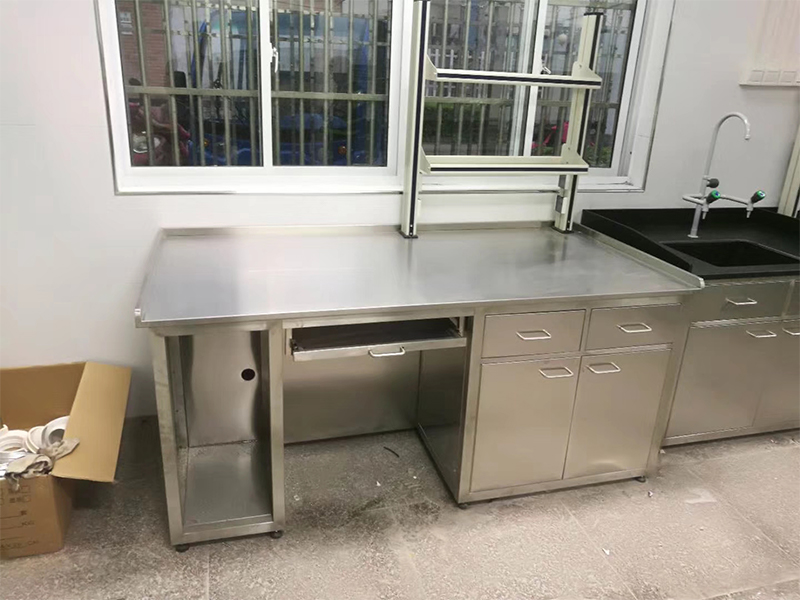
A reinforce stainless bench means your technicians don't hear creaking or feel movement when they're placing or adjusting 200kg of laboratory equipment. That stability translates to better analytical data—baseline drift in mass spectrometry or ICP analysis often stems from instrument vibration caused by bench flex. With our reinforced design, you get tighter peak shapes and lower background noise, especially in trace-level work where signal-to-noise ratio matters. The 316L stainless doesn't stain from sulfuric acid vapor or reactive organic solvents, and it's easy to decontaminate if radioactive samples have been handled. If your lab runs multi-shift operations or hosts visiting researchers, the bench's professional appearance and obvious durability builds confidence. Maintenance is minimal—a quick wipe with ethanol and the stainless stays pristine. We offer a 10-year structural warranty covering frame welds and material defects. For analytical facilities where the bench might be carrying instruments worth 300,000+ rubles, that coverage is insurance against a very expensive accident. Shipping from our Suzhou manufacturing center to Moscow or St. Petersburg takes 28-35 days, and we provide installation guidance with a 3D assembly model so your maintenance team can set it up quickly.